
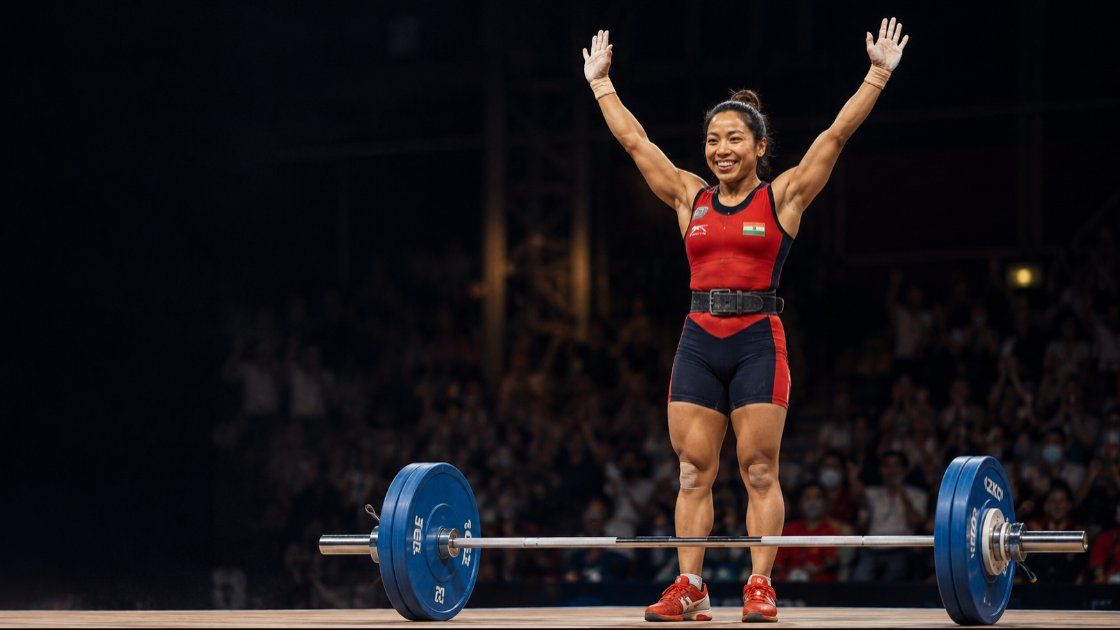
Mirabai Chanu's Commonwealth Games 2026 Gold: What It Means for India's Weightlifting Roadmap
Mirabai Chanu won women's 48 kg gold at Glasgow 2026 with a 190 kg total. What the third straight Commonwealth Games title means for fans, load management, and India's Asian Games plan.
Saikhom Mirabai Chanu opened India's gold account at the Glasgow Commonwealth Games on 26 July 2026 with a controlled win in the women's 48 kg category. The headline is simple: a third straight Commonwealth Games gold and a 190 kg total. The more useful story is what the session reveals about load management, category strategy, and India's next stretch before the Asian Games.
Who Is Mirabai Chanu?
Mirabai Chanu is an Indian weightlifter from Nongpok Kakching in Manipur, born on 8 August 1994. She competes in the light women's categories (usually 48 kg or 49 kg, depending on the meet) and is coached by Vijay Sharma. She is best known as India's Tokyo 2020 Olympic silver medallist in the women's 49 kg class, and as a Commonwealth Games regular since her Glasgow silver in 2014.
Her senior résumé also includes a World Championship gold (Anaheim 2017), later World Championship silvers, and multiple Commonwealth titles. Olympics.com's athlete profile is a short career primer. The rest of this piece focuses on what her Glasgow 2026 gold means now: the result, the choices behind it, and the Asian Games block ahead.
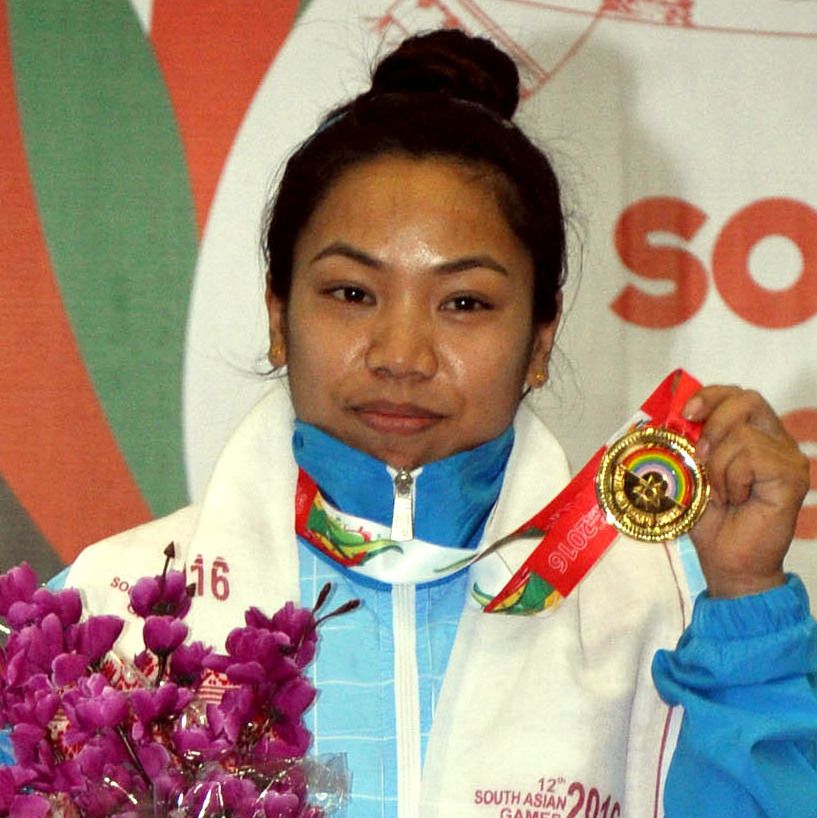
Mirabai Chanu's Glasgow result in one screen
Mirabai Chanu won women's 48 kg gold with 85 kg snatch and 105 kg clean and jerk for a 190 kg total, according to the International Weightlifting Federation's Glasgow day report. She finished 22 kg ahead of Nigeria's Ruth Asuquo Nyong (168 kg), with Malaysia's Irene Jane Henry taking bronze (167 kg). The IWF credits her with a Commonwealth snatch record at 85 kg. She missed both openers, completed three good lifts for 85-105-190, and declined a final attempt. Glasgow 2026's official weightlifting update also notes that she became the first female weightlifter to collect three Commonwealth Games gold medals. For fans tracking India's medal push, treat Glasgow as confirmation of form and planning discipline, not as proof that Olympic-cycle totals are already locked.
Key takeaways
- Third consecutive Commonwealth Games gold after Gold Coast 2018 and Birmingham 2022, plus a 2014 Glasgow silver in the same city.
- Commonwealth snatch record at 85 kg, sealed with one successful clean and jerk at 105 kg, then a skipped final attempt with the Asian Games weeks away.
- Immediate competitive focus shifts to the Asian Games in the 49 kg class, after a season plan that treated Glasgow as a high-confidence checkpoint rather than a maximum-effort peak.
What Happened When Mirabai Chanu Lifted in Glasgow
Chanu competed in the women's 48 kg session at the SEC Armadillo and left little doubt after the snatch. She missed her snatch opener, then produced 85 kg for a Commonwealth snatch record. That left her clear of the chase pack heading into the clean and jerk: Henry had 77 kg and Nyong 75 kg on the IWF card. In the second lift, Glasgow 2026 reported that she waited until 105 kg before taking her first clean and jerk, missed once, made the second attempt, and secured gold without needing a third try.
The final board read 85 / 105 / 190 for Chanu, 75 / 93 / 168 for Nyong, and 77 / 90 / 167 for Henry. The margin was 22 kg. The session also closed a personal loop. Chanu's first Commonwealth medal was silver in Glasgow in 2014. She then won gold at Gold Coast in 2018 and Birmingham in 2022 before returning to Scotland for the third gold. Olympics.com career roundups place those earlier titles in the public record through its achievements overview and Birmingham coverage.
How Mirabai Chanu's attempt card was managed
The Glasgow session is easier to understand as a decision tree than as a highlight reel.
- Survive the opener miss. Missing the first snatch forced an immediate recovery under competition stress and bodyweight pressure.
- Take the snatch record once the bar is moving. The 85 kg success converted a stable lead into a clear scoreboard gap over Henry and Nyong.
- Protect the clean and jerk with one good lift. Waiting until 105 kg, missing once, then making the second attempt was enough once the math favored gold.
- Skip the final attempt. With gold sealed and a harder Asian Games block approaching, the marginal value of another clean and jerk was lower than the injury and fatigue risk.
Coach Vijay Sharma had previewed that approach before the Games. In interviews published by The Hindu and Sportstar in late July 2026, he described Glasgow as closer to a practice checkpoint than a season peak and projected that a total in the 190 to 195 kg range could be enough for gold. Chanu hit the bottom of that band and stopped.
What the records actually mean
The precise, sourced claim is that Chanu set a Commonwealth snatch record at 85 kg on the way to 190 kg. Some newspaper wrap-ups used broader "records tumbled" language for both lifts and the total. Unless an official Games record board is cited, stick to the IWF wording on the Commonwealth snatch mark and the verified podium totals. That is still a historic day: three Commonwealth golds for a female lifter, a dominant margin, and a controlled return to the same Glasgow venue where her Commonwealth story began with silver.
Why Mirabai Chanu's Gold Matters Beyond the Medal Table
This gold matters less as a surprise and more as proof that Chanu can still win big while refusing to overspend. At 31, after a Paris 2024 fourth-place finish and a difficult injury stretch, she chose control over spectacle.
Her Olympic silver in Tokyo 2020 remains the career peak for Indian women's weightlifting on the biggest stage. Olympics.com reported that Tokyo result as a 202 kg total (87 snatch / 115 clean and jerk) behind China's Hou Zhihui. Paris 2024 did not deliver a podium finish. Olympics.com later documented the injury management work around that cycle, including hip-related downtime after Hangzhou and the long rebuild into Paris.
Against that backdrop, Glasgow was a confidence and calibration meet. Pre-event comments from Sharma and Chanu already pointed at the Asian Games as the heavier target. The Asian Games in Aichi-Nagoya (19 September to 4 October 2026) sit much closer to the level of Asian rivals who usually decide World and Olympic podiums.
There is also a pipeline signal for India. On the same Glasgow day, the IWF credited India with Chanu's gold plus silvers for Rishikanta Singh Chanambam in men's 60 kg and Raja Muthupandi in men's 65 kg. One veteran gold does not rebuild a system; a gold plus multiple silvers shows India's lighter-weight program still has Commonwealth depth. Chanu's title also opened India's gold account at Glasgow 2026.
What This Means for Fans, Athletes, and India's Medal Pipeline
1. For fans: read Mirabai Chanu's total in context, not in isolation
A 190 kg Commonwealth total is excellent for the field she faced. It is not automatically a prediction of Olympic podium shape. Tokyo required 202 kg for silver in the 49 kg class. Top world totals in overlapping light classes often sit above 200 kg. Use Glasgow to answer a different question: Can Chanu still deliver under bodyweight pressure, recover from a missed opener, and leave healthy for the next block? On those points, the answer from 26 July is yes.
If you follow attempt-by-attempt streams, watch recovery behavior as closely as the final number. Missing both openers, then making the lifts that mattered, is a skill under fatigue and cut weight. That composure is more transferable than a soft-field margin of 22 kg.
2. For developing lifters: the lesson is periodization, not maximalism
Young lifters often copy podium celebrations and ignore the skip. Chanu's final-attempt pass is the coaching point. When a meet is secondary to a harder block about eight weeks later, the job is to win cleanly and protect joints, sleep, and weight-cut recovery. Sharma's framing of Glasgow as practice before the Asian Games is a public example of that hierarchy.
A practical decision rule for competition selection:
- If the meet is a ranking or funding qualifier, chase the total you need.
- If the meet is a status win with a harder continental championship soon after, chase the lowest reliable winning total.
- If you are returning from shoulder or hip issues, prefer one high-quality success over a third attempt taken only for cameras.
Chanu's recent path supports that caution. The Hindu's pre-Games coverage noted a 205 kg total at the February National Championships in Modinagar, followed by shoulder management that led her to skip the May Asian Championships. Glasgow then became the controlled return, not an all-out season peak.
3. For India's program planners: protect the star without freezing the bench
India still leans heavily on Chanu for early Games momentum in multi-sport events. That is a strength and a risk. The strength is reliability: she has now converted Commonwealth appearances into medals across four Games. The risk is succession. If the public conversation ends at "Mirabai delivered again," the silvers around her get treated as footnotes instead of development evidence.
Program-level implications from Glasgow:
- Keep Chanu's Asian Games 49 kg plan as the near-term priority.
- Use Commonwealth and World Cup exposures for the next tier of Indian lifters while Chanu manages load.
- Measure success in 2026 not only by Chanu's gold count, but by how many Indian lifters can stay within striking distance of continental finals.
What to Do Now After Mirabai Chanu's Commonwealth Win
Do this
- Track the Asian Games weight class, not only the Glasgow class. Post-competition comments reported by The Hindu have Chanu turning attention to the Asian Games after a difficult cut to 48 kg. Totals and openers will look different once bodyweight rules and rival density change in 49 kg.
- Watch whether Glasgow's 190 to 195 kg "enough" band becomes a floor, not a ceiling. Sharma's preview band was about winning Commonwealth gold safely. A sharper Asian Games block should show higher ambition if health holds.
- Separate Commonwealth dominance from world ranking. A 22 kg margin over Nyong is decisive. It does not tell you where Chanu sits against East Asian leaders who regularly push past 200 kg in overlapping classes.
- Follow coach and athlete language on load. When Sharma or Chanu say the meet is preparation, believe the plan until the attempt card contradicts it.
Do not do this
- Do not treat skipped final attempts as lack of hunger. In this case, the skip was the point of the plan.
- Do not rewrite history with the wrong Glasgow chapter. Her 2014 Glasgow medal was silver. The 2026 gold completes a bookend; it does not erase the earlier result.
- Do not inflate record language. A Commonwealth snatch record plus a 190 kg winning total is strong enough without absolute claims that outrun the official boards.
- Do not collapse her category history into one number forever. She has contested 48 kg and 49 kg at different majors as federation rules and Olympic pathways shifted. Future category moves should be reported only when athlete or coach statements support them.
The Bigger Picture Around Mirabai Chanu: Categories, Load Management, and the Next Cycle
Two macro trends sit behind this one gold.
First, category volatility is now a career skill. Commonwealth Games weightlifting categories do not always match Olympic bodyweight brackets one for one. Chanu's recent map includes Commonwealth 48 kg success and Olympic 49 kg experience. Athletes who survive the next decade will be the ones who can change bodyweight strategy without losing technical timing.
Second, peak management has become as important as peak strength. After the win, Glasgow 2026 quoted Chanu saying the gold was very hard because of her opponents, while also stressing pride in the sport that changed her life. The Hindu's mixed-zone reporting added the bodyweight struggle behind making 48 kg and her relief at handling the pressure. That combination (emotional release plus strategic restraint) is the modern elite pattern. Multi-sport Games can create national urgency that conflicts with long-cycle periodization. The teams that medal later are usually the ones that resist turning every podium into a maximum attempt day.
For India, the larger question after Glasgow is not whether Chanu can still win Commonwealth gold. She can. The question is whether the support system around her can convert that reliability into another continental or global podium while building athletes who can win when she eventually changes class or steps back from a cycle.
FAQ
Did Mirabai Chanu win India's first gold at Commonwealth Games 2026?
Yes. Her women's 48 kg title on 26 July 2026 was India's first gold of the Glasgow Games, and it anchored India's weightlifting surge that same day.
What were Mirabai Chanu's lifts in Glasgow?
She recorded 85 kg in the snatch and 105 kg in the clean and jerk for a 190 kg total, per the IWF Glasgow report, after missing both openers and declining a final attempt.
Is this her third Commonwealth Games gold in a row?
Yes. She won gold at Gold Coast 2018, Birmingham 2022, and Glasgow 2026. She also won silver at Glasgow 2014, making this her fourth Commonwealth Games medal. Official Games coverage calls her the first female lifter with three Commonwealth golds.
Who won silver and bronze behind her?
Ruth Asuquo Nyong of Nigeria took silver with 168 kg (75 / 93). Irene Jane Henry of Malaysia took bronze with 167 kg (77 / 90).
Why did she skip her final clean and jerk?
Gold was already secure after the second successful 105 kg attempt, and both athlete and coach had prioritized staying healthy for the Asian Games about eight weeks later.
Where does this sit against her Olympic results?
Her career Olympic high remains Tokyo 2020 silver with 202 kg in the 49 kg class, as reported by Olympics.com. Paris 2024 ended in fourth place. Glasgow 2026 is best read as a successful Commonwealth defense and form check, not as a direct Olympic-total comparison.
Mirabai Chanu's Glasgow gold is real history for Commonwealth weightlifting and a timely boost for India's medal table. The smarter next watchpoint is narrower: whether the same restraint that produced 190 kg in Scotland can produce a sharper, healthier Chanu when Asian Games rivals raise the ceiling in September.
Aarav Sharma
Staff WriterStaff Writer and contributor at DailyCelebsHub.
More articles by Aarav Sharma →